Friday, November 23, 2012

Innis & Gunn - Winter Beer 2011

Purchased From: Received as a gift, thanks!
Serving Type: 330ml bottle, poured into a branded glass

The Winter Beer 2011 pours a chestnut body with a lightly tawny complexion. Amber and yellow glow through at the base of the glass and a large tan head of frothy foam fills the opening. The nose is spicy with prominent vanilla, mild cinnamon and fragrant oakiness. Sweet toasted malts and heaps of caramel fill out the grain profile.

Satiny carbonation hits immediately on the front end and slides smoothly into layers of caramel sweetness. Dark earthy tons aid the emphasis of Winter spices. A hint of vanilla adds some additional sweets and a light milkiness plays well off the caramel grains. Oak flavor develops quickly and is intense from the mid-palate through the finish. A slick, oily wood leads the beer out and leaves the palate with a light seche aftertaste.

Final Verdict: B

Tuesday, November 20, 2012

Innis & Gunn - Rum Cask Oak Aged Beer


Purchased From: Received as a gift, thanks!
Serving Type: 330ml bottle, poured into a branded glass

One of the last times I left off on posting I was right in the middle of reviewing a sample pack of beers from Innis & Gunn. Now that I'm trying to get some posting going again, it is time to pick up with the Rum Cask aged offering. The beer pours a lightly rubied mahogany with a striking clarity and glow. The head is a medium-large off-white foam with a lightly tanned tinge. The foam is light and airy and musters a moderate retention and lacing.

Rum is obvious on the nose with tons of vanilla and oak influence also present. Very minor licorice sneaks in at the edges and adds a light punch to a healthy malt aroma with light sugar and a modest alcoholic infusion. The sweet maltiness of a Scottish ale is apparent, but like the standard cask aged Innis & Gunn, barrel flavor dominates the palate. Sweet woody oak and dry vanilla flavors are clearly imparted from the barrel and dark rum influence brings layers of spiciness and a light fruit flavor.

The mouthfeel is slick with a tinge of carbonation on the finish. Huge rum notes carry through to the aftertaste and a hint of heat fills the back of the palate and the chest. Overall a tasty and enjoyable beer, which brings dominant barrel flavor to a solid malty beer.

Final Verdict: B

Sunday, September 30, 2012

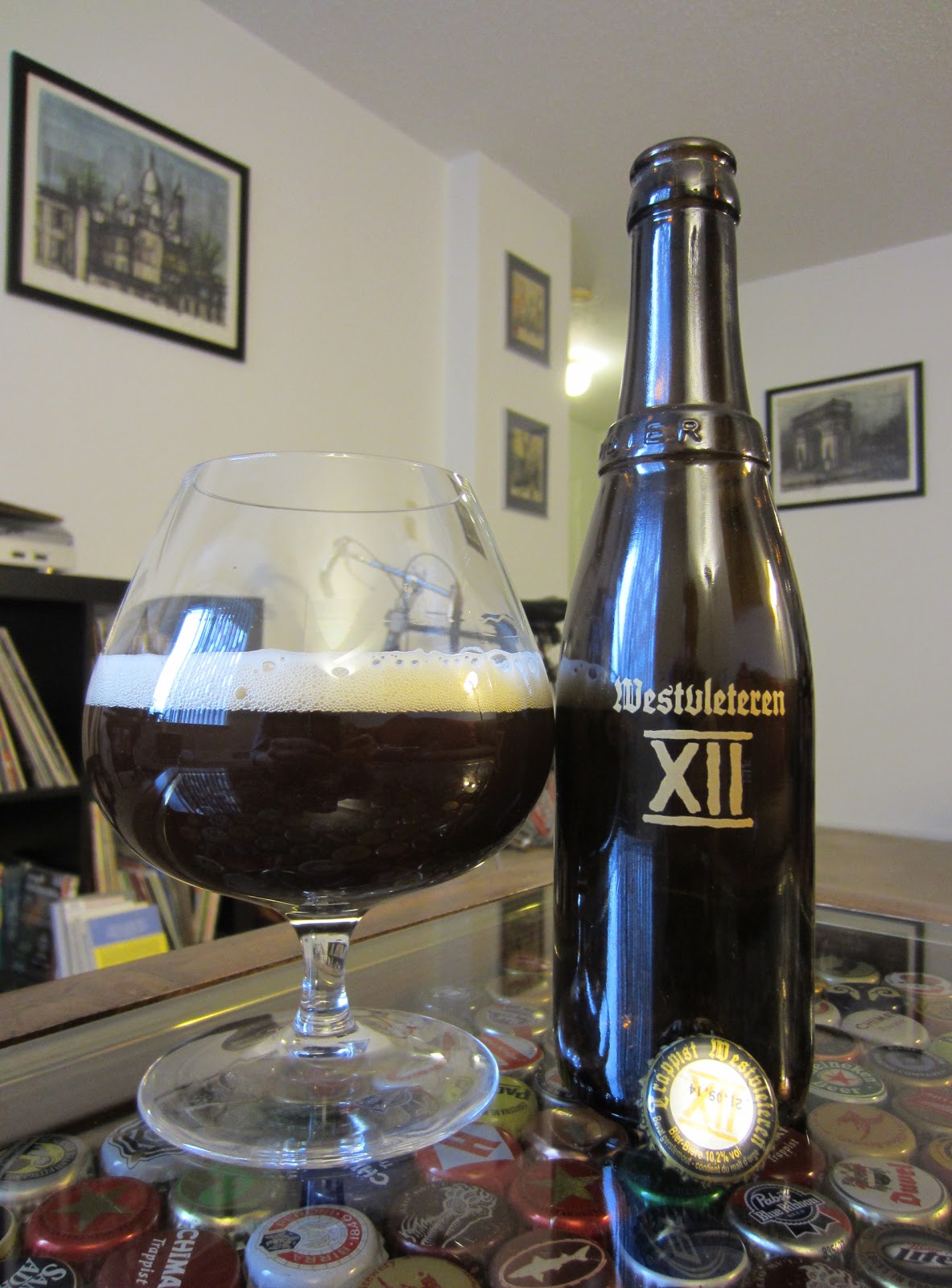
Brouwerij De Sint-Sixtusabdij van Westvleteren - XII

Purchased From: De Biertempel, Brussels, Belgium
Serving Type: 330ml bottle, poured into a snifter

This famous and exceedingly rare (in the United States, at least) was a treat and something I sought out on a recent trip to Belgium. The brewery recently released a collectors pack featuring a few bottles and a glass in the United States and sold like hot cakes. Unfortunately, none of those packs were even available in Connecticut, as the importer apparently doesn't find the state worthwhile for such beer. Westvleteren is one of seven Trappist brewers (Chimay, Orval, Rochefort, Westmalle, Achel, and La Trappe being the other names familiar to beer drinkers), but is among the rarest with second lowest production (lowest being held by Achel -- according to numbers published here).

The Westvleteren XII is perhaps the most iconic entry by the brewery and stands tall at 10.2% ABV as a Belgian Quadruple. It pours a hazy, if not murky, chestnut brown from its signature bottle featuring the moniker "Trappistenbier" on a band around the shallow sloping neck. The beer's head ia a healthy light brown foam and musters a fair retention considering the strength of the beer. It does, however, leave a thin layer on top of the beer for the entire drinking session.

The nose is extremely bready, but somewhat understated initially. Light pumpernickel features atop an alcoholic sweetness. The toasted malts subside on the backend to dark sugars and caramel notes that reveal winter fruits like dried figs and a hint of nuttiness. A dash of spice leads up to the lightly medicinal finish of the aroma.

The beer is strong and boozy. Light carbonation builds waves of velvety texture in the mouth and breaks up the sweet alcohol with an airy evaporation on the tongue. Brown sugar with a dank cellariness defines the beer with a syrupy classic Belgian edge. Deep sweets from dark fruits pair with a light fruit meatiness. Hints of plum and currant combine with the light sweet edge of raisins and produce a hint of Port.

The grainy pumpernickel bread is prominent near the finish and features the lightest hints of caraway seed and even a dusting of flour. The finish is clean with a pronounced, yet refined alcohol that heats the chest. The fruity sweets fully subside and welcome in a powdery dryness and leaves the beer's spicy hints behind.

Often trumpeted, perhaps fueled, at least in part, by its rareness, as the world's best beer this is an absolute must try. Unfortunately very difficult to find, this beer is worth waiting for or seeking out and a requisite part of any trip that brings a dedicated beer drinker to Belgium.

Final Verdict: A

Monday, September 17, 2012

Heineken Blows Doors Off With New Packaging


Be prepared to be wowed by the latest "innovation" in beer packaging design. Perhaps nonplussed by the waning popularity of their "ultra premium" import lager, Heineken announced today that they will be rolling out a newly designed bottle. If you're excited, make sure to keep an eye out in New York state later this month and nationwide starting in March of 2013.

The new bottle design joins the long-neck crowd, eschewing their classic 'stubby' look. But, the real innovation comes with the inclusion of "...an embossed thumb groove that improves grip and encourages people to hold the bottle at a lower point, keeping the beer colder." Which is not only not a change worth a press release  but also a ludicrous claim. 

In what way will holding the bottle lower keep the beer colder? If the drinker holds the bottle at the bottom the hand will be covering the point where there is beer the longest. Perhaps the press release is simply a bit vague on this point and the drinker is intended the use some sort of awkward claw hand position to hold the base of the bottle using the thumb and four fingers arranged vertically, or maybe the groove will be positioned on the neck.

Yet another entry in the 'diversify by design' not substance series that plagues the macro beer market.

Wednesday, June 20, 2012

Stone Brewing Company - Bottleworks 13th Anniversary Ale

Purchased From: Bierkraft
Serving Type: 750mL bottle, poured into a stemmed water glass

Bottleworks, a well-known Seattle-based beer seller, turned to Stone Brewing Company this year to create a beer to commemorate their 13th year in business. The beer was release today, June 20, 2012. Apparently Bottleworks has been creating anniversary ales with a number of collaborators over the years, but, this year they decided to work with craft-brewing titan Stone. Everything about this ale is 13-centric, but, despite their intentions, the ABV only came out to about 11% (the word is that too much specialty malt held back the fermentable sugar).

This epic collaboration features 13 grains: Pale 2-Row, White Wheat, Aromatic, Weyerman Chocolate Rye, Light Munich, Brown Crisp, Crisp Light Crystal, Crisp Amber, Caramunich, Baird's Chocolate Malt, Lightly Peated, Simpsons Dark Crystal, and Oats as well as 13 hops: Bravo, Target, Columbus, Cascade, Delta, Warrior, Magnum, Apollo, Calypso, Perle, Galena, Chinook, and Mt. Hood. 

This beer, billed as an American Strong Ale, plays out much like an Imperial Porter or and Imperial Stout. The body is deep, almost completely opaque in a wide glass, with a mahogany brown body with auburn and ruby inner glow. Only the base of the glass reveals the beer's true hue when held to light. Gently rising streams of minuscule carbonation bubbles fuel a large, fluffy, and creamy head of dense light brown foam. The head retention is fantastic and it leaves a thick ring of lace around the top of the glass and dissipates with elegant patterns as the beer disappears. 

The nose is big and sweet with an impressive malt showing. Caramelized specialty grains bring a variety of profiles, most noticeably a molasses sweetness with deep coffee notes. A hoppy edge tightens this beer and its impressive grain bill. Hops pinch at the nose slightly with a mildly resinous pine and sweet sappy cones of fresh hop essence.

The beer is crisp up front and quickly yields to a huge roasty character. Blackened, coffee-like grains produce a smokey essence that is perhaps the most prominent characteristic of this strongly dark ale, which sports most of the trappings of an export stout. The most darkly roasted malts easily overpower the lighter nuances of the White Wheat grain and Pale Two-Row malts. However, the scattering of rye malt here lends a spicy edge the coffee-like tones and the oats in this beer lend their distinctive smooth slickness, despite the opening and finishing crispness.

Smooth smokiness on the finish beckons another sip along with the dry hoppy finish. Light mineral water characteristics play in at the end and lead effortlessly to the long-lasting dank hoppiness of the aftertaste. 

This beer is excellent, highly drinkable, and very, very good, but the 13 by 13 grain and hop bill seems stuntish when taken in context of the impressive and overbearing stout profile of this beer. To miss the spicy nuances of the beer, the resinous, floral, and earthy hop profiles would be remiss, but, the overpowering roasted coffee profile is the true identity of the beer.

If it's still around, find it, but if you miss it, don't feel slighted if you can pick up the absolutely-world-class Imperial Russian Stout by Stone.

Final Verdict: A

Thursday, April 26, 2012

MillerCoors Debuts New Packaging Gimmick

If you want a full article, rather than reactionary ramblings, check out this "Miller Lite Punch Top Can debuts this week" over at BeerPulse.
As much as Budweiser makes me grown by churning out poor variations on their most popular product Bud Light, I've got to give them some credit. At least they're coming up with new products. Then again, that's the more sinister approach. By pumping out new products, they demand more shelf space in package, grocery, and convenience stores and have the chance of catching the eye of a beer shopper that is looking to "expand his/her horizons" and "try something new." But, alas, this is not about Budweiser coming up with new products, this is about MillerCoors spending "creative energy" churning out packaging redesigns.

At least this one is practical, if you're goal is to improve the flow of beer to facilitate chugging. The last improvement from MillerCoors to a Miller Lite product was the "Vortex Bottle" that purported to do the same thing, but was a ludicrously made-up mechanism. Here, the punch tab in the top of the can, actually will improve air flow. It's like the marketing folks have been taking cues from frat guys and binge drinkers and have attempted to implement in-can shot-gunning. I think by next year they'll have put another punch out in the side of the can.

What kills me is that this is clearly part of a larger pattern by MillerCoors. Rather than reworking the beer or improving the product they simply create a new, pointless, marketing feature. It's product differentiation without any substance. For Miller it was the Vortex Bottle, now the Punch Top Can. For Coors it's been an even more hilarious/pitiful series for the Coors Light line. The Cold-Activated labels, then Cold-Activated cans, then, the epitome of idiocy, the Cold Activation Window! "Another engineering marvel from Coors, we've cut a hole in our packaging!" All, just in case you're not able to accurately gauge that you've chilled your beer enough. Or, is it to help ensure that you never drink the beer at a temperature that most beer (read: not Coors and its cohort) is intended to be consumed. Because, after all, if you actually experienced the flavors of these beers and dared to compare, you'd perhaps find that there really is something better out there.

Advertisement